Friday, May 17, 2013

41.6% Worldwide Growth of Smartphones in First Quarter

IDC platform market shareStatistics about operating system market shares of smart phones in first quarter of 2013 are detailed below.

"Android OEMs shipped 162.1 million handsets in the quarter, giving the platform a 75% share of total worldwide shipments, while Apple’s 37.4 million devices"

More Smartphone/ OS Market share: Apple, Samsung, HTC...

Samsung Galaxy S4 will increase Androids' second quarter market shares. 

Ron
Insightful, timely, and accurate semiconductor consulting.
Semiconductor information and news at - http://www.maltiel-consulting.com/

IDC: Android OEMs Shipped 162M Smartphones In Q1, More Than 4X Apple’s Rate; Windows Phone Now In (Distant) Third

INGRID LUNDEN  posted yesterday
http://techcrunch.com/2013/05/16/idc-android-oems-shipped-162m-smartphones-in-q1-more-than-4x-apples-rate-windows-phone-now-a-distant-third/
IDC today was the latest to publish its numbers on smartphone market shares after the major handset makers released Q1 earnings, and like Gartner,Strategy Analytics and the rest, it underscores the power of Google’s Android platform at the moment: Android OEMs shipped 162.1 million handsets in the quarter, giving the platform a 75% share of total worldwide shipments, while Apple’s 37.4 million devices put it at an increasingly distant second position at 17.3%. Microsoft’s Windows Phone, driven primarily by its partner Nokia (79% of all WP shipments), grew the most of all platforms, with a rise of 133.3%, but that still puts it at a single-digit share, 3.2% on 7 million devices shipped.
idc smartphone shipments
That meant that Microsoft has now overtaken BlackBerry, which declined by just over 35% with 6.5 million shipments, ending with a 2.9% market share.
Important to note that IDC specifies that this is devices shipped, not sold. Some analysts have told me that the two are effectively interchangeable terms, but shipped is also potentially a more optimistic figure: it points to how well retailers and carriers think certain models are likely to sell in the quarter ahead. Occasionally these can lag compared to how well certain handset makers are actually doing if a device ends up selling worse than expected.
What “shipped” numbers like IDC’s say is that Android and iOS continue to, more or less, remain the only games in town in terms of how confident sales channels feel about shifting devices, with other platforms relegated to niche status. This is something that companies like BlackBerry are trying to change, as evidenced by a recent deal to extend a $256 million loan to Telefonica for purchasing BlackBerry devices.
IDC’s numbers show that together these two platforms accounted for nearly 200 million units (199.5 million) shipped, up 59% over a year ago. The smaller players are not to be dismissed, though. Not only is Windows Phone the most rapidly rising of all platforms at the moment, but IDC notes that BlackBerry’s BB10 new range have hit 1 million shipped devices this quarter.
But turnaround will only come with that kind of growth being sustained. “Given the relatively low volume generated, the Windows Phone camp will need to show further gains to solidify its status as an alterative to Android or iOS,” writes Kevin Restivo, senior research analyst with IDC.
For the time being, the message to users, and to app developers, is that these are the platforms where you want to be. Considering how key content has been as a route to attracting users to these devices, that will continue to pose a challenge for the smaller players.
As with Strategy Analytics’ numbers yesterday detailing the profitability of different smartphone platforms in the quarter, IDC notes that Samsung is by far the “clear leader” in Android. It notes that it had a 41.1% market share. As a sign of the ongoing fragmentation of players on the platform, no other single OEM had more than a single-digit percentage market share after that, “and an even longer list of vendors with market share less than one percent.” The fact that it’s still “free” to license Android, and relatively easy to modify it for a more custom experience, will mean that it will continue to be the platform of choice for OEMs looking for more revenues from the ongoing boom in smartphones.
As we saw in Apple’s earnings earlier in the quarter, the company’s sales of iPhones are at an all-time high, but in comparison to the growth of the rest of the market, it’s actually off, with market share down nearly six percentage points. There is some feeling that part of this is due to the fact that the platform appears stale compared to all the change going on elsewhere with software and hardware features, news handsets and more. “Although demand remains strong worldwide, the iOS experience has remained largely the same since the first iPhone debuted in 2007,” IDC notes, pointing to a “massive overhaul” that appears to be on the cards with iOS 7.
IDC also notes that over the last year, shares of the biggest platforms have fluctuated, although Android’s current 75% is the highest in a year. Against that, the last time that Android approached 75%, in Q3 2012, Apple’s share was only 14.5% as people held out for a new iPhone model. That shows that Apple’s growth this quarter was at the expense of declines for other smaller platforms.
IDC platform market share
photo: flick
r

Thursday, May 16, 2013

Smartphone/ OS Market share: Apple, Samsung, HTC...

It will be interesting to see how Samsung Galaxy S4 will impact second quarter market shares. See below results from first quarter 2013.


Ron
Insightful, timely, and accurate semiconductor consulting.
Semiconductor information and news at - http://www.maltiel-consulting.com/


comScore Reports March 2013 U.S. Smartphone Subscriber Market Share

Android Phone and iPhone Now Combine for 91 Percent of U.S. Smartphone User Base
http://www.comscore.com/Insights/Press_Releases/2013/5/comScore_Reports_March_2013_U.S._Smartphone_Subscriber_Market_Share
RESTON, VA, May 3, 2013 – comScore, Inc. (NASDAQ: SCOR), a leader in measuring the digital world, today released data from the comScore MobiLens service, reporting key trends in the U.S. smartphone industry during the three month average period ending March 2013. Apple ranked as the top smartphone manufacturer with 39 percent OEM market share, while Google Android led as the #1 smartphone platform with 52 percent platform market share.
Smartphone OEM Market Share
136.7 million people in the U.S. owned smartphones (58 percent mobile market penetration) during the three months ending in March, up 9 percent since December. Apple ranked as the top OEM with 39 percent of U.S. smartphone subscribers (up 2.7 percentage points from December). Samsung ranked second with 21.7 percent market share (up 0.7 percentage points), followed by HTC with 9 percent, Motorola with 8.5 percent and LG with 6.8 percent.
Top Smartphone OEMs
3 Month Avg. Ending Mar. 2013 vs. 3 Month Avg. Ending Dec. 2012
Total U.S. Smartphone Subscribers Age 13+
Source: comScore MobiLens
Share (%) of Smartphone Subscribers
Dec-12Mar-13Point Change
Total Mobile Subscribers100.0%100.0%N/A
Apple36.3%39.0%2.7
Samsung21.0%21.7%0.7
HTC10.2%9.0%-1.2
Motorola9.1%8.5%-0.6
LG7.1%6.8%-0.3
Smartphone Platform Market Share
Google Android ranked as the top smartphone platform with 52 percent market share (71.1 million subscribers), while Apple’s share increased 2.7 percentage points to 39 percent (53.3 million subscribers). BlackBerry ranked third with 5.2 percent share, followed by Microsoft (3 percent) and Symbian (0.5 percent).
Top Smartphone Platforms
3 Month Avg. Ending Mar. 2013 vs. 3 Month Avg. Ending Dec. 2012
Total U.S. Smartphone Subscribers Age 13+
Source: comScore MobiLens
Share (%) of Smartphone Subscribers
Dec-12Mar-13Point Change
Total Smartphone Subscribers100.0%100.0%N/A
Google53.4%52.0%-1.4
Apple36.3%39.0%2.7
BlackBerry6.4%5.2%-1.2
Microsoft2.9%3.0%0.1
Symbian0.6%0.5%-0.1
About MobiLens
MobiLens data is derived from an intelligent online survey of a nationally representative sample of mobile subscribers age 13 and older. Data on mobile phone usage refers to a respondent’s primary mobile phone and does not include data related to a respondent’s secondary device

Tuesday, May 7, 2013

Google and Facebook Shaking Server market


See more about server marketplace at Google, Facebook Top Buyers of Intel Server Chips


and at SSD, Flash, iPad, PC, Tablet, and Servers Architecture


Ron
Insightful, timely, and accurate semiconductor consulting.Semiconductor information and news at - www.maltiel-consulting.com


Google and Facebook Are Shaking Up the Server Market

The 'Net giants are shunning traditional suppliers for cheaper, made-to-order hardware.

Hewlett-Packard and Dell, the top two global vendors of server computers, are caught in a whirlwind of change.
The personal-computer market, which generates enormous revenue for both firms, gets most of the attention when the companies' attempts to right their businesses are analyzed. But the humble server, which many assume is the stable part of the computer world, is experiencing far greater change -- change that, in coming years, could pay off in a big way for the duo, or cause them tremendous pain.
Hewlett-Packard (ticker: HPQ) made up 26.5% of worldwide server sales volume in the December quarter; Dell (DELL), 21.3%. Servers handle a myriad of tasks in corporate- and Internet-data centers, from serving up files to desktop computers in offices to processing online purchases to streaming video to tablet computers. Last year, the server market was worth roughly $52.5 billion on shipments of 9.7 million units, according to research firm Gartner.
That's relatively minuscule, compared with 2012 PC shipments of 352 million units. But the corporate market is a bastion of profits that offsets the low margins on PCs.
In the fiscal fourth quarter ended in January, for example, Hewlett-Packard's enterprise group, although not a perfect proxy since it sells networking and storage equipment in addition to servers, accounted for almost 16% of HP's total profit. PCs produced only 3% of the company's earnings, even though they generated greater revenue.
And unlike the personal-computer market, which is fighting tablets and smartphones for attention, servers are constantly finding new uses, and they're not going away anytime soon. "Servers have always been a gluttonous market," says Gartner analyst Jeff Hewitt, meaning the industry just can't get enough of them. Richard Fichera, who follows the industry for Forrester Research, even argues that building server farms is "the élan vital [vital impulse] of modern society."
Fichera and Hewitt agree that a couple of massive changes are under way.
One is that large Internet stars such as Google (GOOG), Facebook (FB) and Amazon.com (AMZN) are building their own servers by picking out parts and having machines assembled to spec by some outfit other than Dell or HP, often one of the Asia-based "original design manufacturers," such as Inventec, Quanta or Wistron. Google and Amazon "have incredibly low-cost infrastructures" as a result of using this commodity hardware, says Fichera.
Public and private organizations, such as schools, government and smaller companies, don't have the resources of a Google, but they're eagerto get the kinds of savings that can come from buying cheap, no-name hardware.
The category of "other," meaning not HP and Dell, made up 35% of server unit shipments in the fourth quarter, up from 31% a year earlier. Hewitt expects the figure to rise this year.
"The substitution of commodity servers for name brands is a real thing," observes Fichera. He cites a "large Wall Street firm" that has more than 75,000 servers, of which 20% are nonbranded. Hewitt says that Google and other nonbrand buyers have "been one of the primary drivers of unit growth" in the server market for some time.
The other trend is toward simple, modular servers -- basically, appliances -- that perform one dedicated task. As Hewitt sees it, the software vendor VMware (VMW) brought about a revolution in servers by allowing companies to use a single machine for several tasks simultaneously. The inadvertent outcome of VMware's software is that some of the server "workloads" -- video serving, database queries -- are now as big as the entire database market in terms of the number of "virtual servers" they employ. That makes it feasible to create specialized, stripped-down servers built for each kind of workload.
And he observes, "Where it gets interesting over the next three to four years is that these low-power processors in our cellphones are all that's needed for certain kinds of server workloads that don't demand a lot of individual CPU horsepower."
Both trends are being helped by the breakdown of the old WinTel regime in computing. Says Hewitt: "For years, if you did what Microsoft (MSFT) and Intel (INTC) told you to do in terms of product design, you could make money." Now, "You can still listen to Intel, but there are other influences weighing on server design."
HP and Dell realize all this, of course. They hope that some outfits that aren't Google will look to them to wrap their brand and support around the cheaper hardware -- to mainstream it. HP and Dell can certainly build server appliances.
But for the moment, both trends favor the no-name vendors of Asia, along with the Silicon Valley appliance start-ups. "There is market pressure on Dell and HP from both sides," says Hewitt. The outcome, he adds, "will depend, in part, on how they respond and whether they want to end up squeezed into a higher-margin but increasingly lower-volume segment of the market."
THE STAR OF BLACKBERRY'S fiscal fourth-quarter earnings report on Thursday was undoubtedly the phone maker's chief, Thorsten Heins, who resonated calm, confidence, and intelligence as he batted away the frantic questions of the business news anchors. This is a man who will go places.
And what of the business? What we know is that BlackBerry's subscriber base is declining; it fell by three million last quarter. Shipments of the new BlackBerry models are off to a good, but not great, start, with one million shipped in the quarter. And the company produced a surprise profit in the three-month period.
The stock (BBRY), which is up almost 22% this year, trades at just 1.2 times tangible book value, and the company has a still significant cash pile of $2.9 billion. All that probably puts a floor under its shares, around their Thursday close of $14.44. What we don't know is whether sales of the new handsets will speed up or slow down, and by how much. The mobile market is fiercely competitive, with Apple (AAPL) and Samsung Electronics (005930.Korea) dominating sales. We don't know how quickly -- or whether -- subscribers will keep sliding. But the drop last quarter -- the quarter in which BlackBerry introduced new phones -- isn't encouraging.
Probably, earnings estimates will rise in coming weeks as the next new model, the Q10, comes to market. This is a stock that still trades based on the premise that BlackBerry the company can be a profitable third- or fourth-place player in the smartphone market. For now, based on those hopes, the stock will continue to levitate. 

Friday, May 3, 2013

Samsung NAND 1xnm Manufacturing TLC (Triple Level)

The article below discuss leading edge process and cell technology of 20 nm flash NAND cell.

"Samsung's 21 nm NAND flash device is fabricated using a triple metal, double poly, 21-nm CMOS process. The single transistor flash cell measures approximately 42 nm by 46 nm for a physical cell area of 0.0019 µm2.  Its  competitors  in  process technology include  a 19-nm, 32-Gbit  MLC  NAND  flash from Toshiba and   a  20 nm 32 Gbit MLC NAND Flash from Intel-Micron."

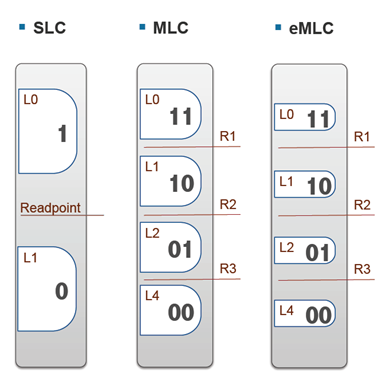
SLC, MLC & eMLCSee Intel 20nm process  technology from March 2012 Micron/ Intel 20-nm 64G MLC NAND Flash Memory Reverse Engineered

3D is likely to be a strong contender for scaling leading edge NAND flash.

See Samsung Advances Memory Storage eMMC to 1x-nm Process regarding what 10 nm really is.

Ron
Insightful, timely, and accurate semiconductor consulting.Semiconductor information and news at - www.maltiel-consulting.com


Samsung hits triple-level-cell NAND flash milestone

Arabinda Das, 5/1/2013 1:32 PM EDT

http://www.eetimes.com/design/memory-design/4413213/Samsung-hits-triple-level-cell-NAND-flash-milestone?pageNumber=0&goback=%2Egde_1803012_member_237577215


Samsung announced recently that it started production of advanced NAND flash devices with 128Gbit, triple-level cell (TLC) NAND memory using 10-nm class process technology.

Similarly, Micron also announced in February that it would come to market with NAND flash devices with a memory capacity of 128 Gbit that also use TLC design. It was only last fall that Samsung introduced a 64 Gbit NAND flash using TLC and 21-nm process technology.

Clearly, the industry is moving toward TLC cell design even for demanding SSD applications. The concept of a multi-bit per cell technology was first introduced by Toshiba and for the last five years, all flash device makers have products using the 2-bit per cell design. (Download TechInsights' flash NAND technology roadmap here).

A multi-bit cell device has a high density and a low cost per bit, but usually has a reduced endurance. In a conventional single bit flash device the number of electrons placed on the floating gate affects the threshold voltage (Vt) of the cell. This effect is used to set the state of the cell to either high or low.

In a multi-bit cell the threshold is set to several different values. The difference in voltage between these levels is small, which puts an additional constraint of placing the charge precisely on the floating gate and of sensing it correctly. In a 2 bit per cell memory, the cell is put in four states. In a 3-bit per cell there are eight states (states = 2n), which imposes a colossal task for flash device manufactures to have a tight cell threshold voltage distribution and a precise sensing of cell data.

According to several papers, the number of electrons stored on a floating gate for the 30-nm node class is slightly less than 100. So, in a 21-nm node with the TLC design, the circuitry for placing and sensing charge on the floating gate is dealing with only a few tens of electrons in each state.

Therefore, Samsung’s 21-nm, 64 Gbit TLC NAND flash can be considered an industry milestone. It is the first commercial SSD product using the TLC design in 21 nm node. TechInsights has done a structural analysis of the 21-nm, 64 Gbit TLC NAND flash and is also following up with a waveform analysis.

The K9CFGY8U5A-CCK0  21-nm flash memory  is one of the industry’s leading flash memory devices, packing 64G bits into a single 102.87 mm2 die, using conventional floating-gate flash memory technology. This NAND flash was found in Samsung’s latest SSD drive, the SSD840 (256GB). The basic teardown of the SSD drive is shown in figure 1.

Samsung's 21 nm NAND flash device is fabricated using a triple metal, double poly, 21-nm CMOS process. The single transistor flash cell measures approximately 42 nm by 46 nm for a physical cell area of 0.0019 µm2.  Its  competitors  in  process technology include  a 19-nm, 32-Gbit  MLC  NAND  flash from Toshiba and   a  20 nm 32 Gbit MLC NAND Flash from Intel-Micron.

Floating gate technology.
All NAND flash memories continue to evolve the floating gate technology. But the basic cell structure has remained unchanged throughout several process generations. The self-aligned floating gate poly (SAP) process is still used by the three major manufactures.

Intra-gate poly to poly contacts are adopted by all manufacturers. In fact, two of the major manufacturers are still using the control gate (CG) and inter-poly dielectric (IPD) wrap around the floating gate (FG) configuration. Managing to keep most of the processes steps the same as the previous node is a great advantage for manufacturing because all the accumulated experience in process development is utilized to produce the new generation of devices. And yet every new node is a technological feat.

With every new technology node, the memory density (Mbits/mm2) increases and the process technology becomes more complex because all features on the die shrink but do not shrink proportionately with the same ratio.

Figure 2, shows a compound picture where the top image is the SEM cross-section along the Bitline direction of Samsung 21-nm TLC NAND flash and the bottom image is the corresponding topographical image at poly Wordline level. Figure 2 shows that the NAND string is consisting of 64 active Wordlines, two dummy Wordlines two select transistors at both end of the Wordlines and two contacts (Sourceline and Bitline).


Figure 2: Correlating SEM cross-section in Bitline direction with topographical image at poly-Wordline level. The topographical image shows the staggered Bitline contact layout.

The ratio of the length of the active Wordlines to the NAND string length is the overhead factor. Table 1 recapitulates some of the important features of last three Samsung NAND flash devices. This table puts in evidence the fact that the active cells are shrinking more than the string-select and ground select transistors and as a consequence the NAND string overhead has been increasing for the last three generations. As the active cells shrink the close distance between adjacent floating gates leads to parasitic capacitance which may  result in a Vt shift. Samsung has done a major process change in 21-nm NAND flash devices to counter the parasitic capacitance issue as elaborated in Figure 3.


Table 1: Compiling some of the NAND cell features of last three Samsung NAND flashdevices. TLC designs make a huge impact on the memory density. As the technology scales down, the overhead seems to increase.Figure 1: Basic teardown, from SSD 840 drive to single NAND flash die.

Tungsten metal gate.
This 21-nm NAND flash has abandoned the silicide process and opted for tungsten metal gate. This transition is not new; it has already been done in many DRAM products. However, depositing tungsten on poly is not a straightforward process; several interface treatments have to be done, which are described in the report.

Tungsten metal gates leads to controllable air gaps, which mitigate the parasitic capacitance. Other challenges including choosing a suitable inter-poly-dielectric (IPD) layer. The IPD thickness affects program/erase speed and magnitude of read current and the quality of the dielectric layers has a direct impact on the endurance of the flash device. 

A thinner of IPD layer will increase the capacitive coupling between the control gate (CG) and the floating gate (FG) and generate a higher read current and a faster program erase mechanism but can also compromise the retention capability. So a tradeoff has to be made.

The IPD layer composition in 21-nm NAND flash is still the same as the previous generation but the individual layer thicknesses are modified. Also, in the Wordline direction, the aspect ratio for poly 2 gap-fill is greater than five. Here, too, Samsung has come up with new process techniques. Samsung’s 21-nm 64 Gbit TLC NAND flash technology has a process flow similar to its previous generation but with an enhanced process capability. It remains to be seen if the next generation 10-nm class 128-Gbits TLC NAND flash will manage to prolong the existing process flow or will take the next big step of fabricating 3-D NAND stacks.

Interested in NAND flash technology? You can check out TechInsights' technology roadmap for NAND flash here.

Arabinda Das is a senior process analyst at TechInsights.

Monday, April 29, 2013

1st Time Smartphones Outsold Feature Phones


The article below documents the fast pace of smartphones' growth and shows that for the first quarter of 2013, the sales of smartphones surpassed feature phones. Smartphone growth is driven by access to fingertip computing anywhere, anytime (see 2010 article Four Billion Cell Users : Computing Power Anytime, Anyplace).
Computing at fingertips
between the five top vendors, Apple loss market share and had the smallest increase of growth between 2012 and 2013. This is due to the growth in emerging countries where the iPhone is too expensive relative to other smartphones. It is not likely that Apple will introduce an inexpensive iPhone in China considering the tough price competition it would face from the much cheaper Android phones. People in emerging countries are more price conscious. Apple will want to maintain its high quality brand and its higher pricing and is likely to repeat its Mac vs PC history see the 2008 story -Are iPhone and Android Smart Phones Repeating the History of Mac vs. PC in the 80s
The fast growth of smartphones in 2012 and 2013 by Huawei, ZTE, CoolPad, and other companies in emerging countries was made possible by the chips manufactured by MediaTek (see January story about MediaTek Apples' Cook in China (MediaTek Impact)).
Ron
Insightful, timely, and accurate semiconductor consulting.Semiconductor information and news at - www.maltiel-consulting.com


Smartphones outpace feature phones for first time ever

http://news.cnet.com/8301-1035_3-57581566-94/smartphones-outpace-feature-phones-for-first-time-ever/
by Jonathan Skillings , April 26, 2013 5:29 AM PDT
 

In the first quarter of 2013, smartphones accounted for more than half of phone makers' shipments worldwide. Samsung remained the top dog, but LG, Huawei, and ZTE all saw big gains.
LG returned to IDC's smartphone Top 5 in the first quarter of 2013 with record-high shipments, riding a strong interest in its LTE-enabled devices, including the Optimus G.
(Credit: Josh Miller/CNET)
It seemed inevitable, and now it has happened: for the first time ever, feature phones have taken a backseat to smartphones in terms of quantities shipped.
In the first quarter of 2013, device makers shipped 216.2 million smartphones worldwide, a volume that accounted for 51.6 percent of total global shipments and that marked the first time smartphones have claimed more than half of all quarterly shipments, according to market researcher IDC.
The smartphone market grew 41.6 percent compared with the first quarter of 2012, but declined 5.1 percent from the shipment tally for the fourth quarter of 2012. The first quarter of the year typically sees a slowdown, especially in comparison with the holiday-shopping-filled fourth quarter.
The first quarter saw a total of 418.6 million mobile phones -- both smartphones and the less-powerful feature phones -- shipped worldwide, IDC said Thursday.
"Phone users want computers in their pockets," IDC analyst Kevin Restivo said in a statement. "The days where phones are used primarily to make phone calls and send text messages are quickly fading away."
IDC smartphone top 5 Q1 2013(Credit: IDC/Screenshot by CNET)

See more additional table and statistic about the whole mobile vendors

Wednesday, April 24, 2013

Tablets,Smartphones, and SSDs Market Share of NAND in 2013


The Smartphones, Tablet PCs, SSDs Propelling NAND Flash Sales in 2013 report  discusses the percentages of NAND sales to the various end markets.  NAND demand is being impacted quite a bit by the growth of tablets that are replacing laptops.   iPad market grew fast and the pc makers have been marketing and testing out various tablet forms that are gaining acceptance.  Tablets are expected to reach 12% of the $30.0 Billion NAND flash market in 2013.  In addition, every Tablet has an SSD storage, so the growth of Tablets will lead to increased demand of SSDs.

More about Tablets are the new mobile (Tablets are the new mobile, the slide deck in the article shows the growth of mobile and Tablets in the Apple and Android eco-sphere. There are many other slides at the link below. The future of mobile was discussed in the April 15, 2009 Mobile Computing the Next Big Market article)

Ron
Insightful, timely, and accurate semiconductor consulting.Semiconductor information and news at - www.maltiel-consulting.com

Wednesday, April 3, 2013

Top Semiconductor Ranking 2012 (Sales, Growth)

http://www.semiconportal.com/en/archive/news/news-flash/120330-isuppli-semiconductor-ranking.html
While it is useful to include foundries in sales ranking, still Sandisk is not listed in the ranking.

See more about it at 2012 Q1 Ranking: Toshiba Outperforms NAND Market and overall foundries and Japanese fab status Semiconductor Ranking: Foundries Soar, Japanese Crash


Ron

Insightful, timely, and accurate semiconductor consulting.Semiconductor information and news at - www.maltiel-consulting.com

Qualcomm, GloFo star in chip supplier ranking

Peter ,  3/28/2013 6:18 AM EDT

http://www.eetimes.com/electronics-news/441084/Qualcomm-GloFo-are-stars-of-2012-chip-supplier-ranking
 
IDMs and fab-lite companies suffer as pure-play fabless and foundry companies are the star performers in a 2012 ranking of chip suppliers from IC Insights. 
LONDON – A ranking of the top 25 worldwide semiconductor companies by sales, covering ICs optoelectronics, sensors and discrete devices, from market research firm IC Insights shows that Globalfoundries increased sales by 31 percent and Qualcomm by 30 percent. Qualcomm broke into the top five (see figure 1 below).

Foundry TSMC remained in third place but increased sales by 18 percent getting closer to Samsung and Intel, which both saw sales decline. Although both Samsung and Intel are making first steps to enter the foundry business the former was weighed down with memory sales and the latter with a focus on processors for the lackluster PC market.

In total, the top 25 semiconductor companies’ sales declined by 1 percent in 2012, two points less than the total worldwide semiconductor market decline of 3 percent.

By geography the top 25 includes 10 suppliers headquartered in the U.S., seven in Japan, three in Taiwan, three in Europe, and two in South Korea.


Click on image to enlarge.

2012 top 25 semiconductor suppliers ranked by sales ($millions, including foundries).

Same companies, different order, ranked by annual growth

IC Insights has also supplied a ranking of the same 25 companies ranked by annual growth (see figure 2 below). It is notable that lower order of that ranking filled with companies that experienced a double-digit percentage fall in sales includes a number of European and Japanese companies. 

It is notable that GlobalFoundries with a 31 percent increase in sales and AMD with a 17 percent decline are at opposite ends of that ranking in 2012. AMD was the original parent of Globalfoundries and has been its primary customer. IC Insights interprets the success as an indication that Globalfoundries has achieved success in attracting additional IC foundry customers such as STMicroelectronics, Freescale, Qualcomm and others.

The inclusion of foundries in such rankings is contentious because it means that some sales are double counted – from foundry to fabless chip company and then from fabless chip company to customer. However, IC Insights said that in a forthcoming update to The McClean Report, marketshare rankings of IC suppliers by product type will also be presented and foundries are excluded from these rankings.


Click on image to enlarge.

2012 top 25 semiconductor companies by sales ranked by annual growth ($millions, including foundries).