Showing posts with label google glass. Show all posts

Monday, August 26, 2013

Longest Battery Life Smartphone: Moto X (Teardown)

Below are some snapshot from Ifixit teardown of Google/ Motorola new cell phone. One of the key features of Motorola cell phones have been their very long battery life. Is it due to the combination of Qualcomm processor and the power management chip, some of the other chips, or their custom system architecture (software/ hardware)?

The key chips in Moto X are listed below.

Ron
Insightful, timely, and accurate semiconductor consulting.
Semiconductor information and news at -
http://www.maltiel-consulting.com/


Motorola Moto X Teardown

 
Image #1

Step 1 — Motorola Moto X Teardown 

  • The love child of Motorola and Google is here, and we are dying to crack open the little Motoroogle.
  • Technical Specifications:
    • Dual-core 1.7 GHz Qualcomm Snapdragon S4 Pro processor
    • 2 GB RAM
    • 4.7-inch 1280x720 pixels AMOLED display
    • 16 or 32 GB internal storage
    • Qualcomm Adreno 320 GPU
    • .........
    • Image #1

      Step 9 

      • Motorola claims the Moto X battery can power through an amazing 24 hours of "mixed usage."
      • How does the Moto X accomplish such a feat with a 3.8 volt, 2200 mAh Lithium ion battery? The secret is in the X8 Mobile Computing System.
      • The Motorola X8 Mobile Computing System is comprised of a Qualcomm Snapdragon S4Pro family processor, a natural language processor and a contextual computing processor.
      • Motorola developed a custom system architecture, which, when coupled with eight processor cores, allows for the delegation of processing power:
        • 4 graphics processor cores for "stunning clarity"
        • 2 application processor cores for "swift action"
        • 2 low-power cores—"awaiting your next command"
      Image #2

      Step 10 

      • Out comes the upper midframe panel, housing the speaker, headphone jack, more antennas, and pressure contacts.
        • Yay, pressure contacts! We like spring pressure contacts because they don't require any work to disconnect.
      • This is possibly the most modular headphone jack we've ever seen. It pops right out of the upper midframe panel, spring contacts and all.

      10 MP rear-facing camera

    • Image #1

      Step 15 

      • Notable ICs on the motherboard:
        • Toshiba THGBMAG7A2JBAIR 16 GB eMMC NAND Flash
        • SK Hynix H9TKNNNBPDAR RAM (we assume that the Snapdragon S4 Pro is also layered under this IC)
        • Qualcomm PM8921 Power Management IC
        • Texas Instruments TMS320C55 Digital Signal Processor
        • NXP 44701 NFC Chip
        • Skyworks 77619-12 Multiband Multimode Power Amplifier Module for Quad-Band GSM / EDGE and Penta-Band (Bands I, II, IV, V, VIII) WCDMA/ HSDPA/ HSUPA/ HSPA+/ LTE
        • Texas Instruments MSP430 F5259 Mixed Signal Microcontroller
      Image #1

      Step 16 

      • Additional ICs:
        • Qualcomm WCD9310 Audio Codec
        • Qualcomm WCN3680 802.11ac Combo Wi-Fi/Bluetooth/FM
        • NXP TFA9890 High Efficiency Class-D Audio Amplifier
        • Skyworks 77737 SkyHi™ Power Amplifier Module for LTE Bands 12/17 (698-716 MHz)
        • EPCOS 7 959 Wireless LAN / Bluetooth Filters (IF)
        • 0V00660 A56G 1B

Wednesday, June 12, 2013

Google Glass Teardown:CPU, Flash, and DRAM

Some highlights of teardown of google glass below.

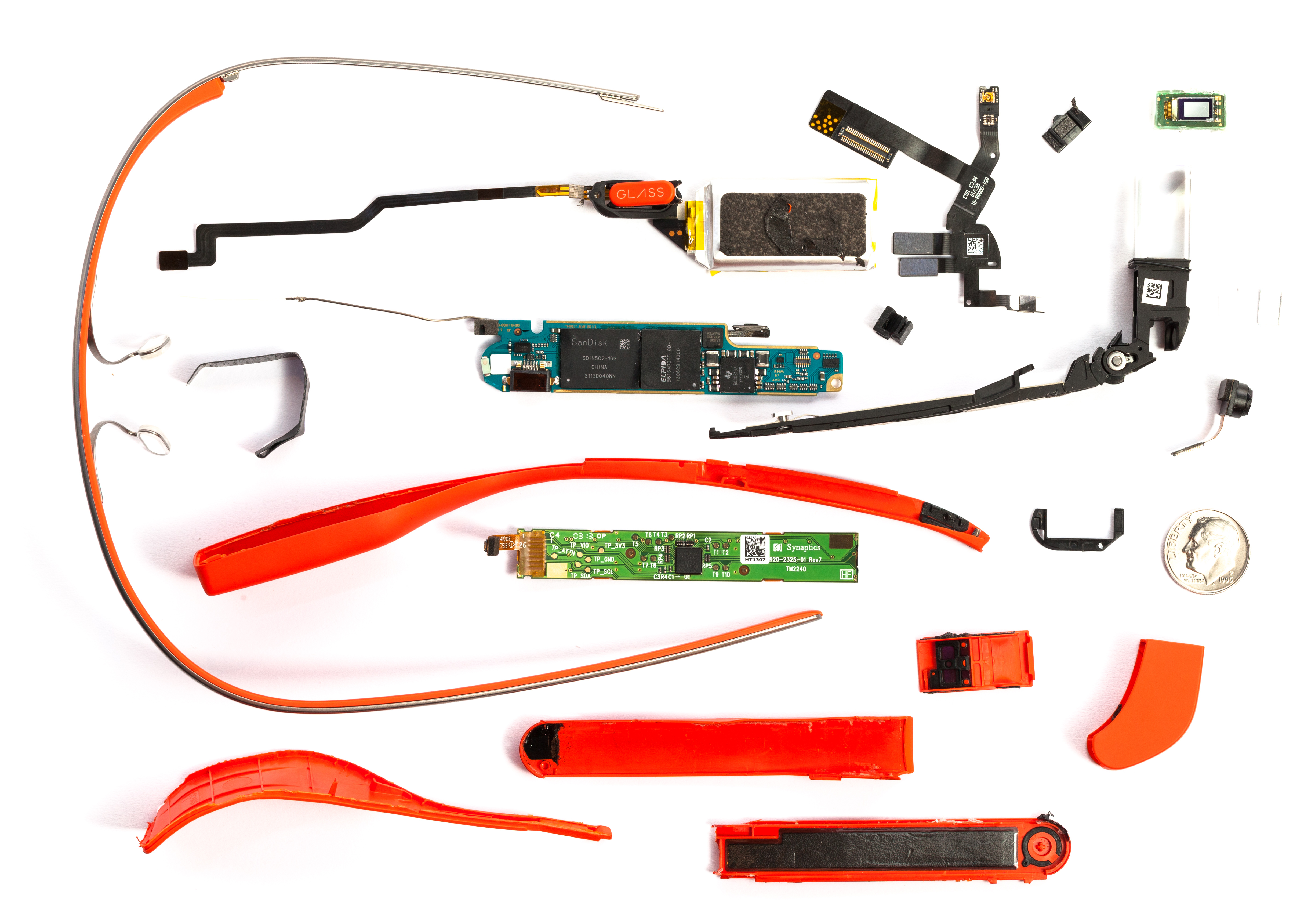
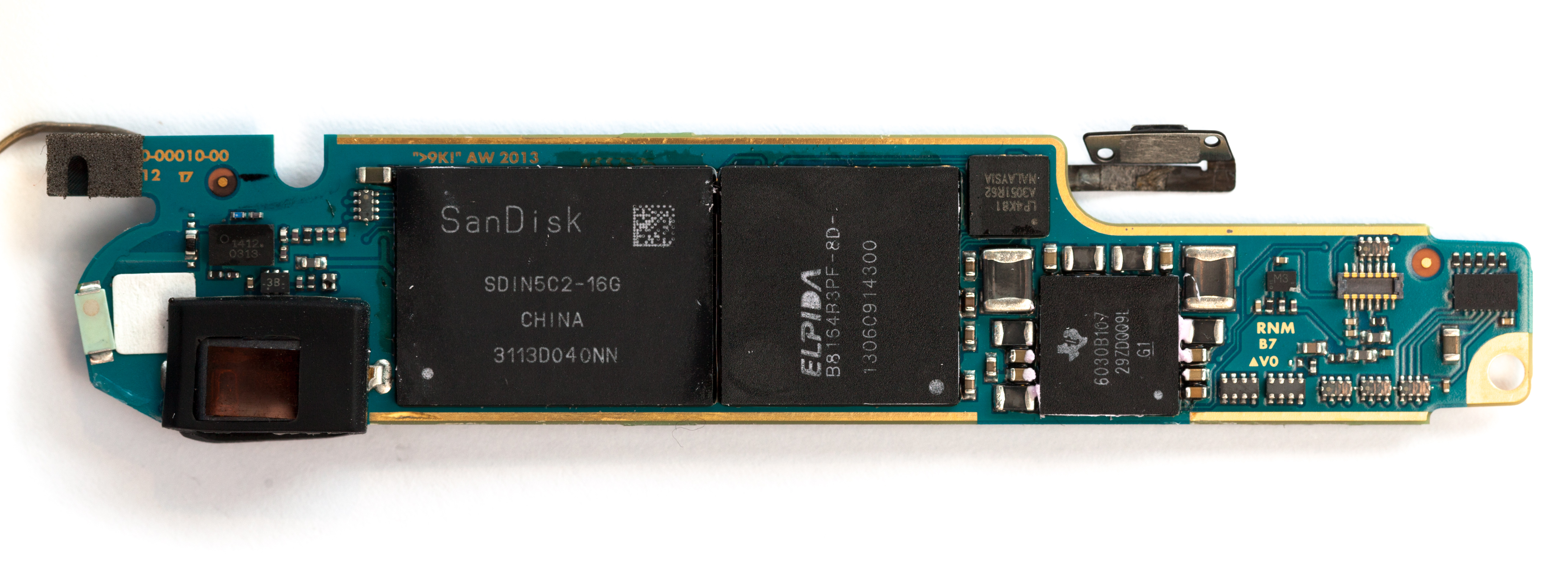
"core chips powering Glass: a TI OMAP4430, 16GB of SanDisk flash, and an Elpida mobile DRAM chip. "


Ron
Insightful, timely, and accurate semiconductor consulting.
Semiconductor information and news at - http://www.maltiel-consulting.com/

What is this Glass thing anyways?

Google's latest and hottest gadget needs little introduction.
Since its public unveiling in April 2012, the tiny head-mounted
Android computer has been collecting controversy and sociological
analysis. It is currently available in limited beta to eminent members
of the tech community and to a selection of "Glass Explorers". As
members of the latter program, we are delighted to be able to explore Glass.
.......

Side Touchpad

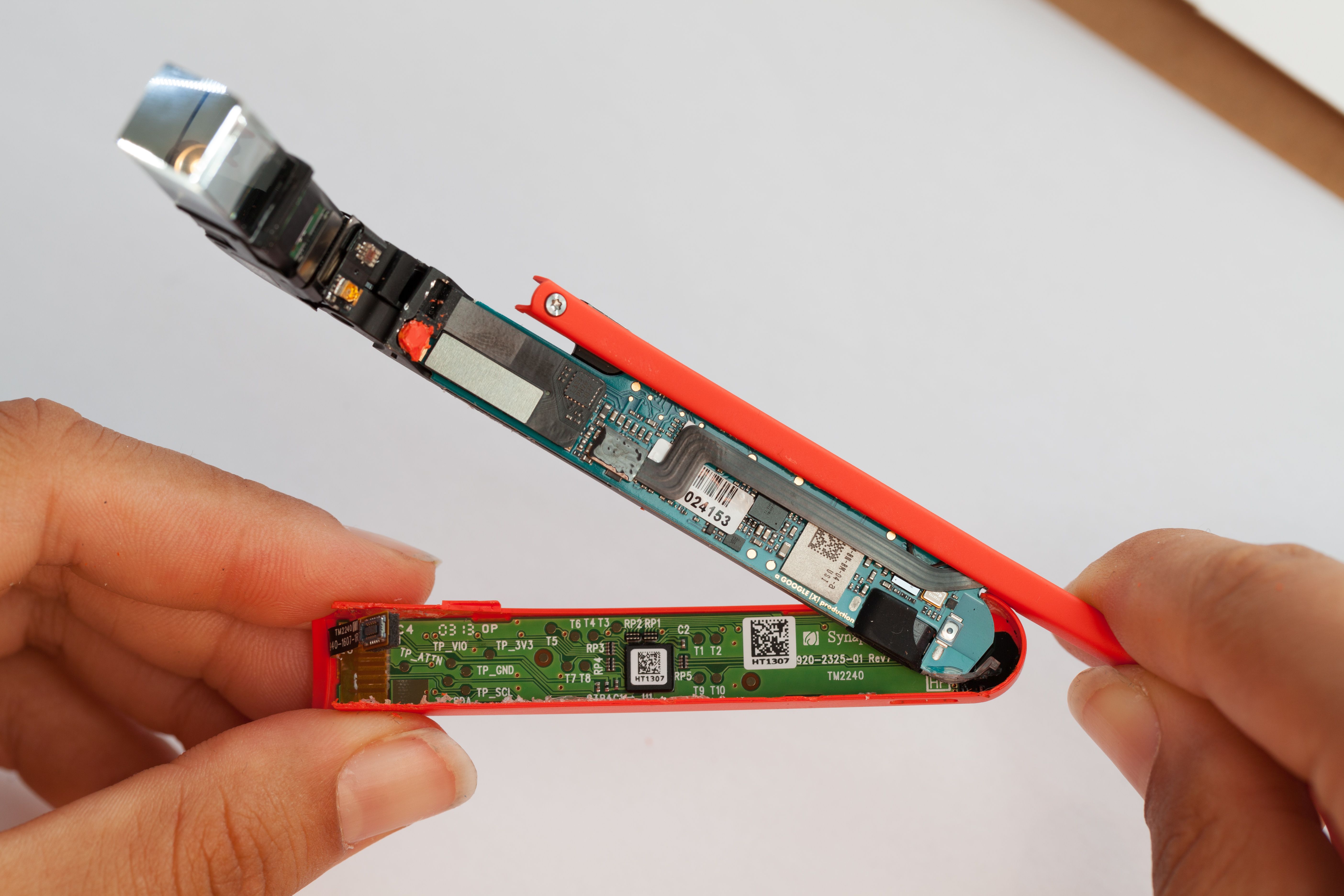
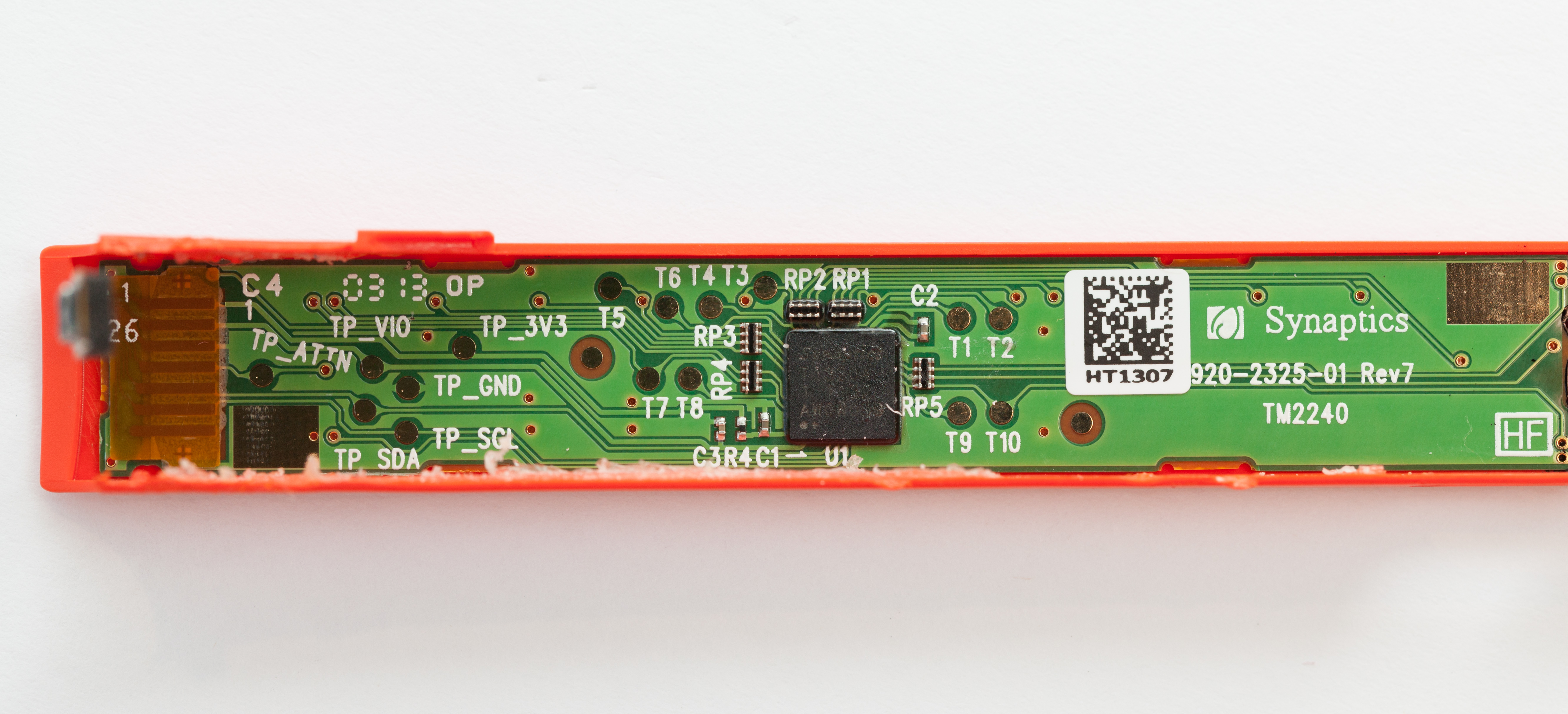
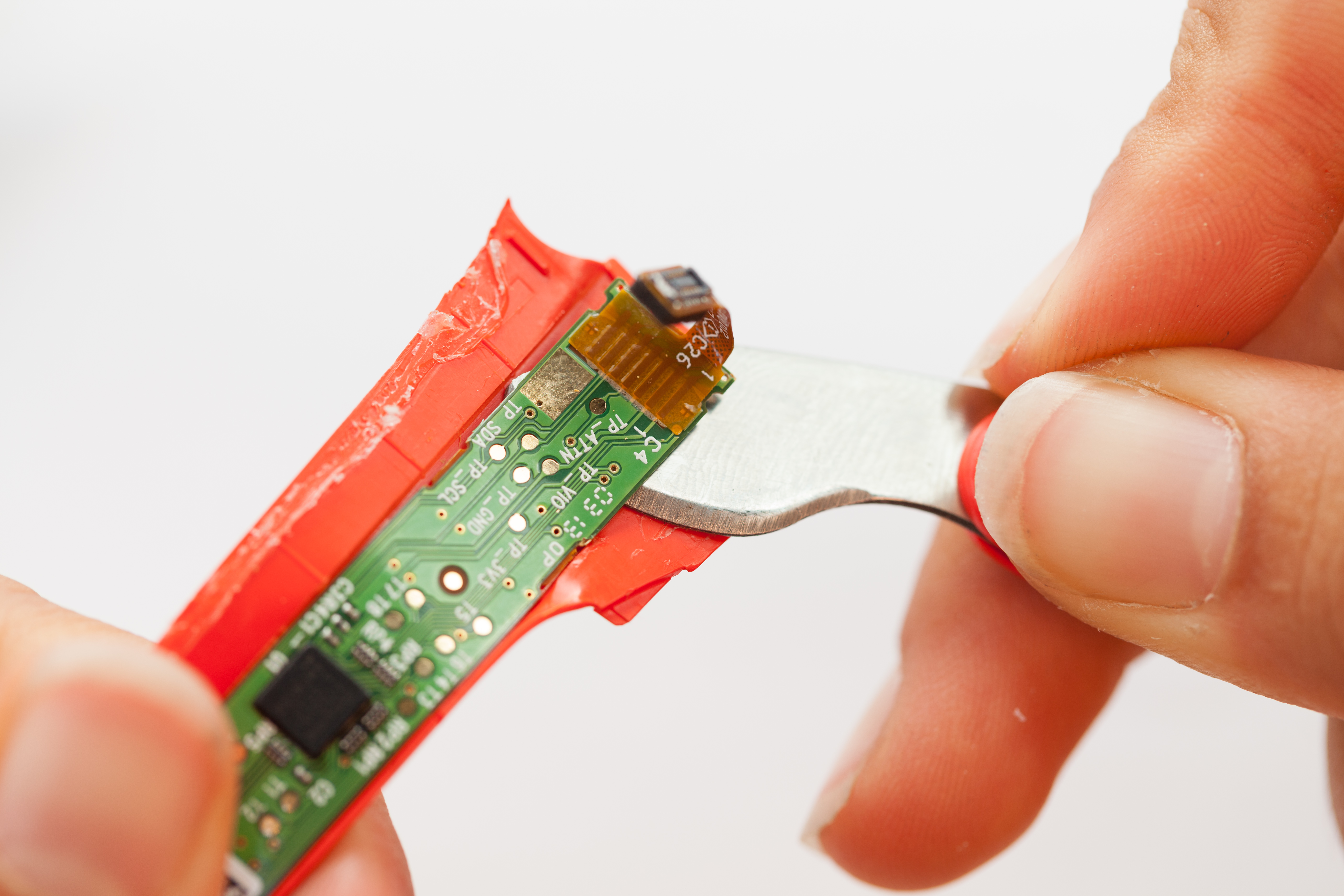
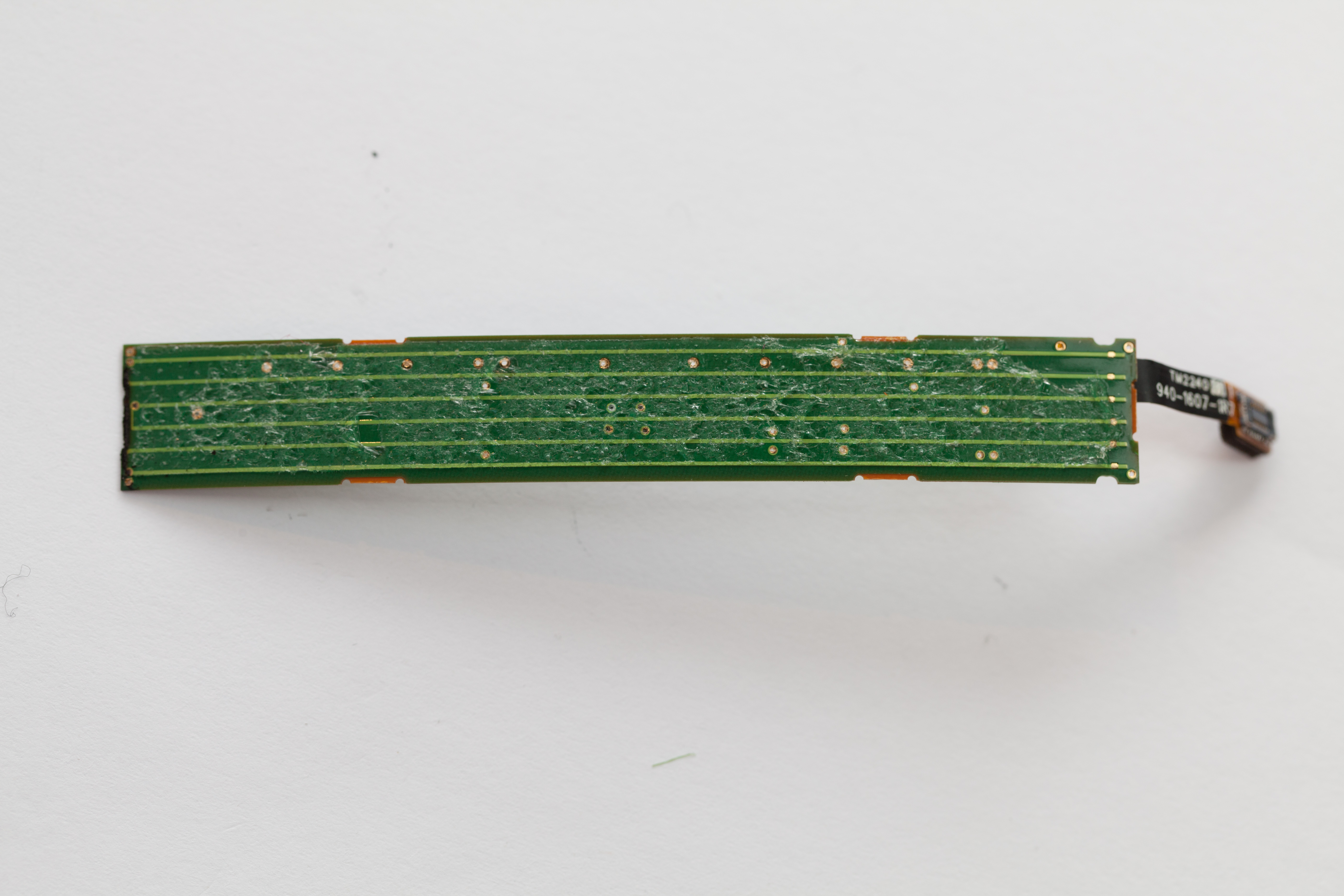
Removing the casing exposed a few parts, including the separate touchpad module on the right side of the unit. When a Glass users looks like they are pensively tapping their temple, they are interacting with this sensor. The touchpad is a full custom module made by Synaptics, and is driven by a Synaptics T1320A touchpad controller.

Main CPU Board

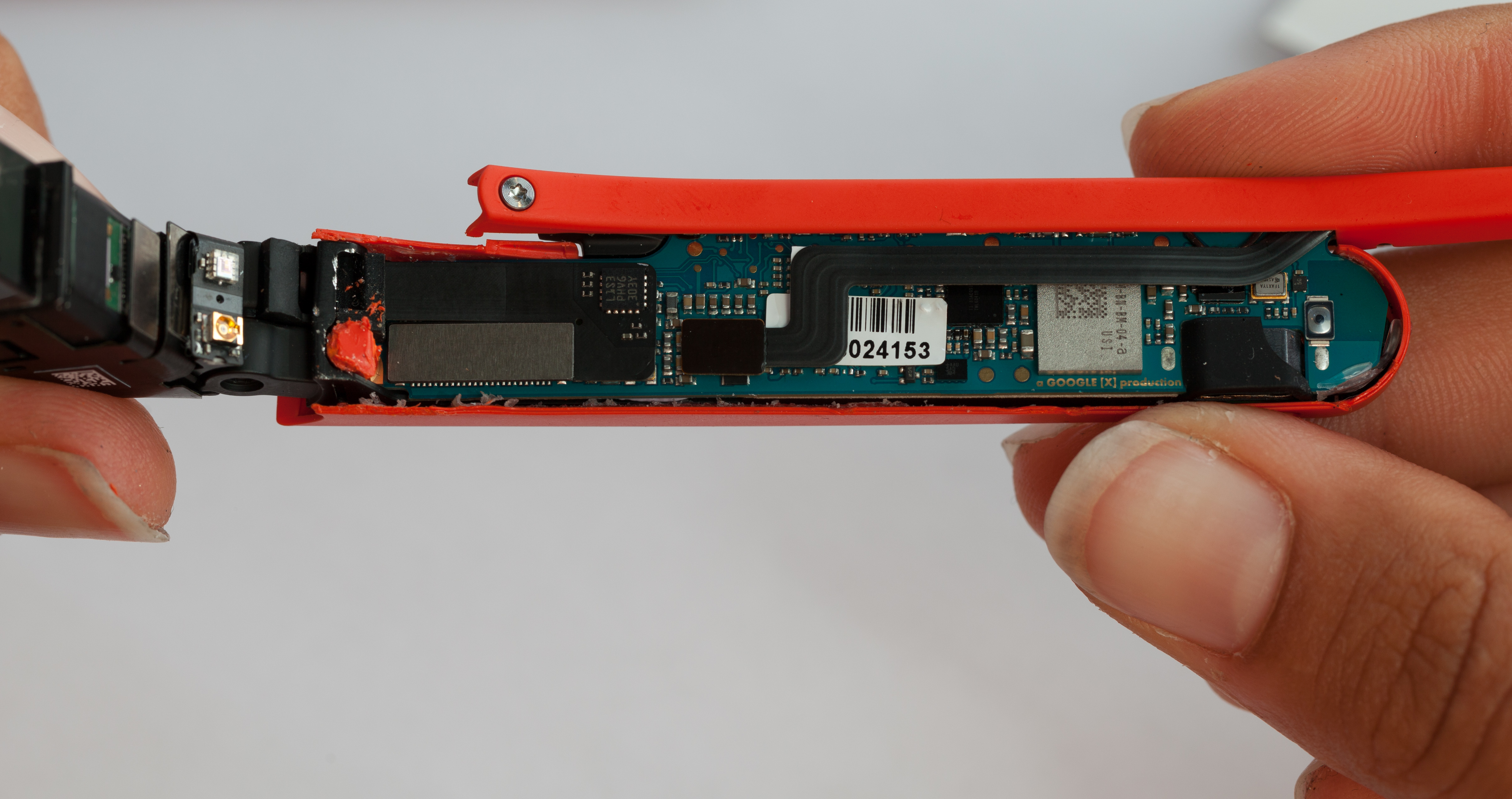
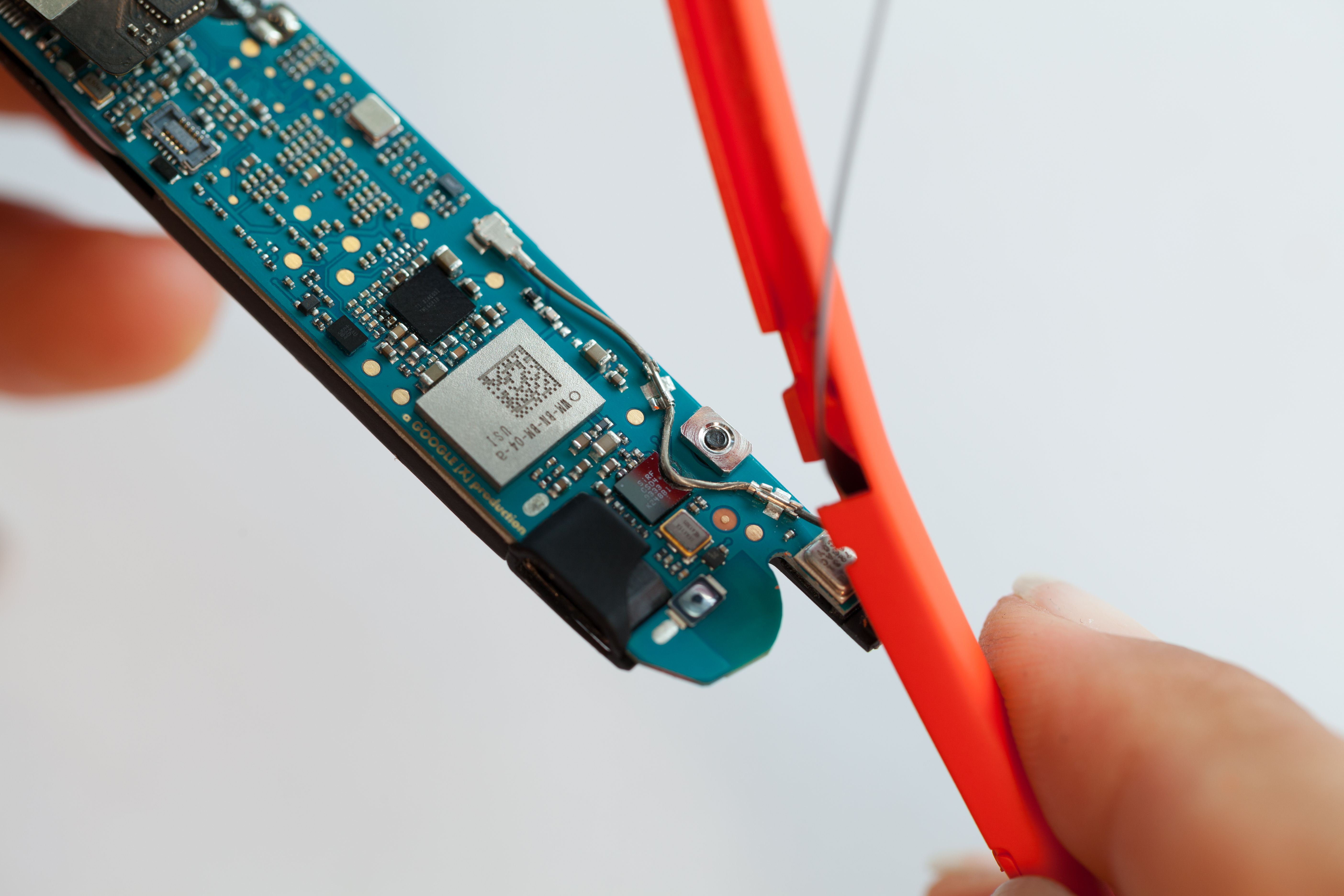
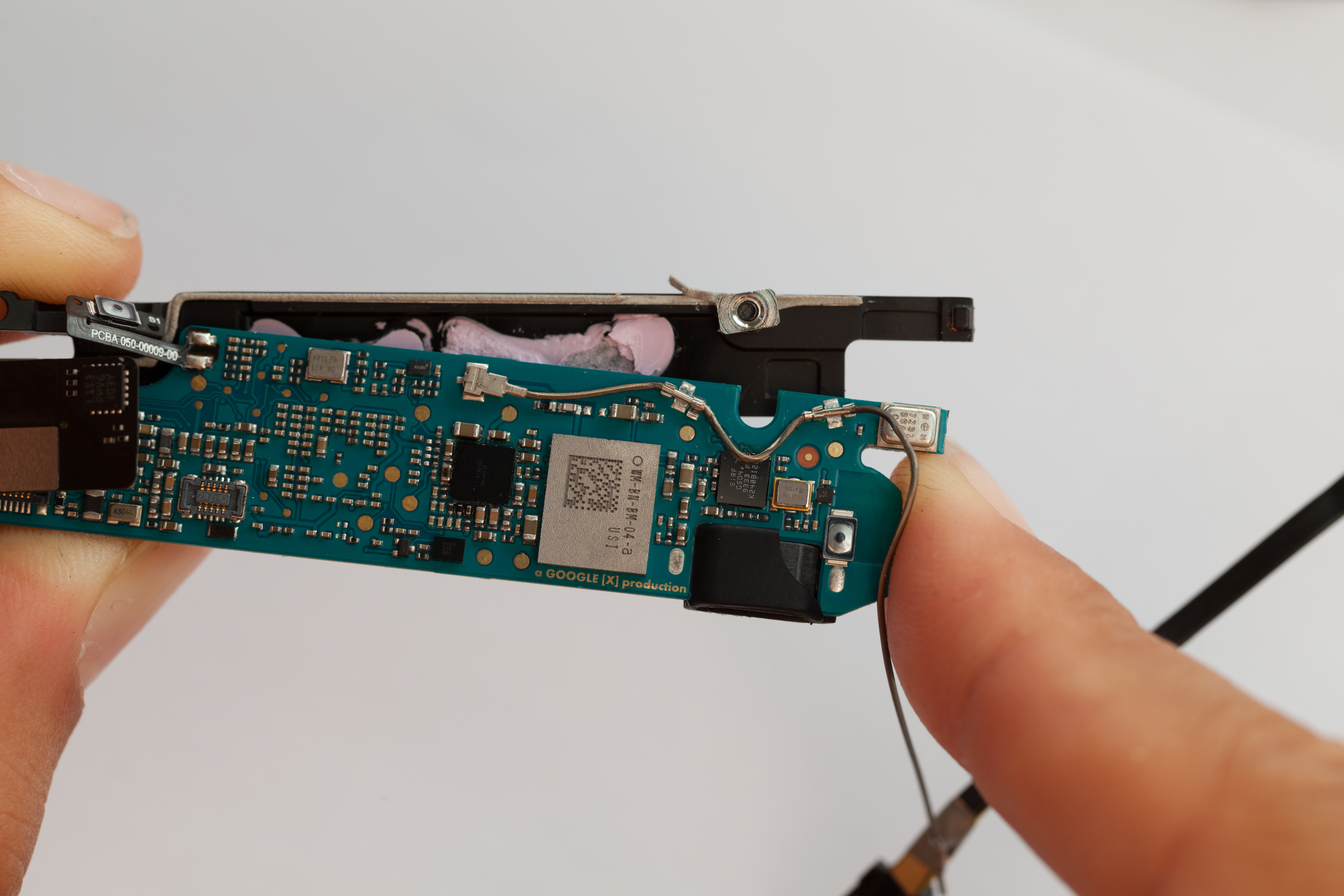
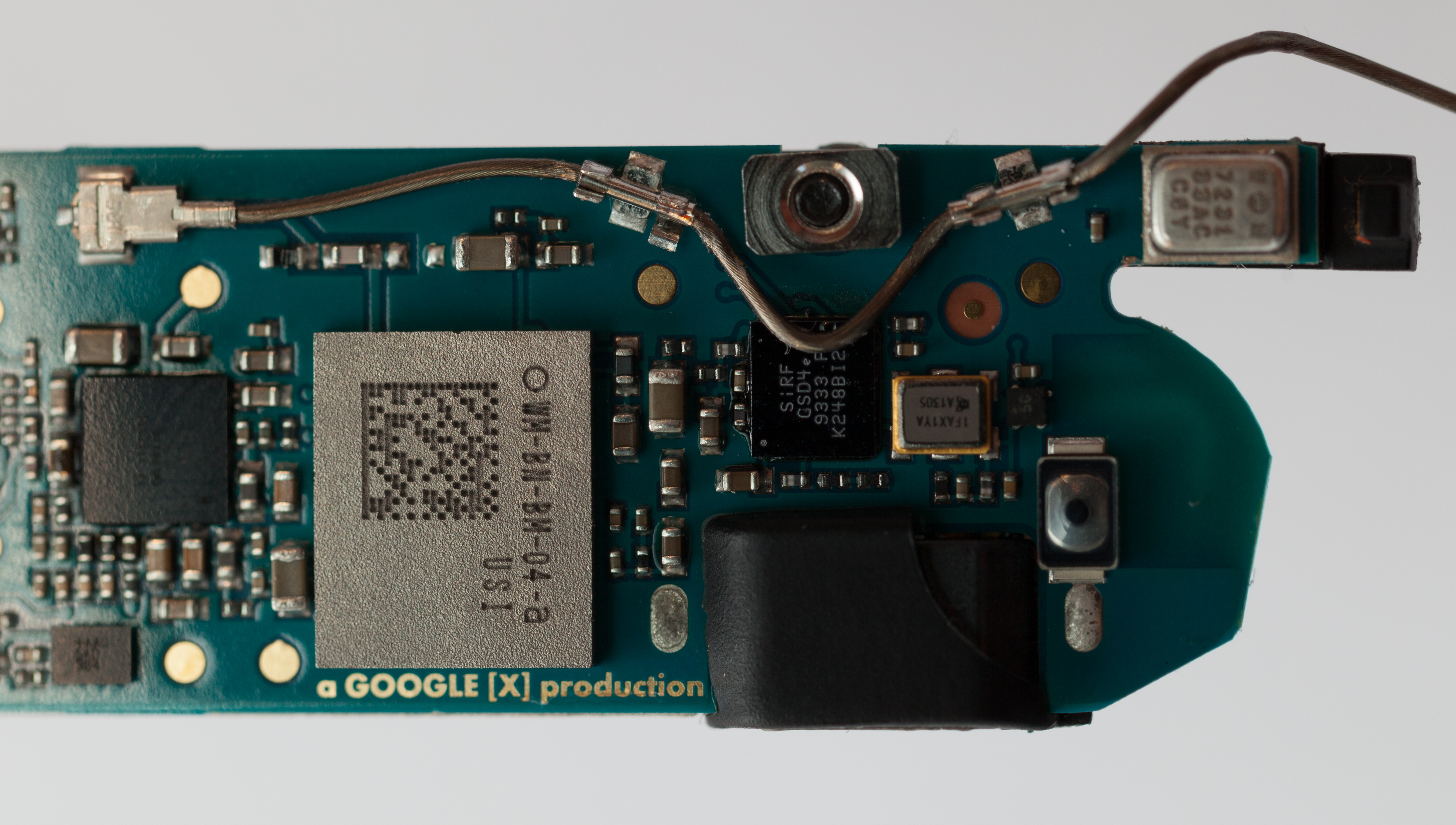
The main logic board was now exposed. The inwards-facing side holds an RF module, some small connectors and support ICs, and copper noting that this is "a GOOGLE [X] production".
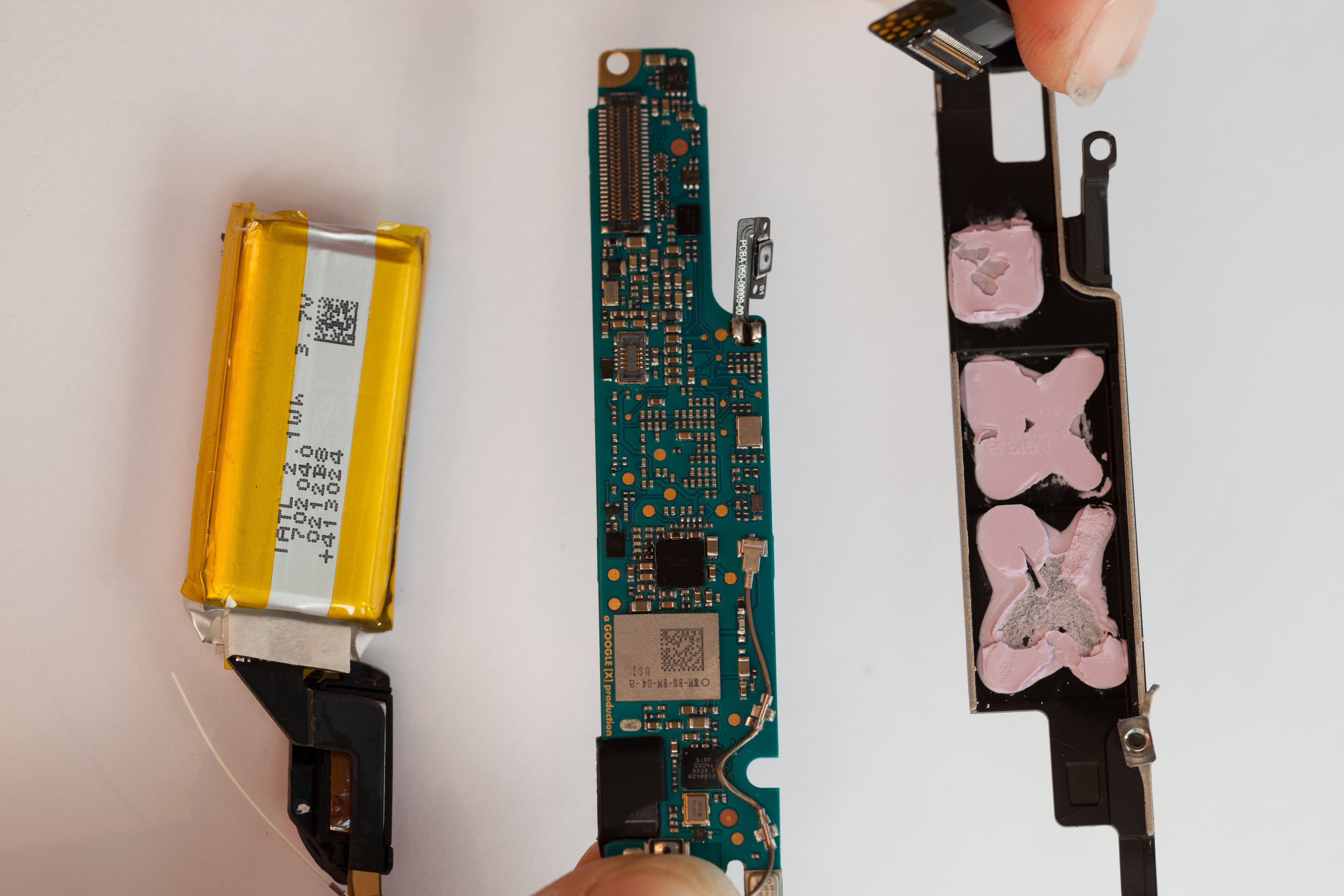
This board was stuck to a thermal pad with lots of paste. After removing it and cleaning off the pink thermal compound, we revealed the core chips powering Glass: a TI OMAP4430, 16GB of SanDisk flash, and an Elpida mobile DRAM chip. A flex PCB and an RF cable, anchored with some metal tabs and an MMCX (?) connector, trailed from this board to the behind-the-ear pod.
Some text in the copper on this board reads >9K!   It's over 9000!

Behind-Ear Module

To keep the unit's weight distributed more evenly, Glass keeps its battery in a rounded bit behind the wearer's ear. We stripped this area open, again applying destructive force to tear the plastic.
The single-cell Lithium Polymer battery sits at the end of the flexprint PCB and is marked as having a capacity of 2.1 Wh (roughly 570 mAh). It is not user-replaceable, not even a little bit.